
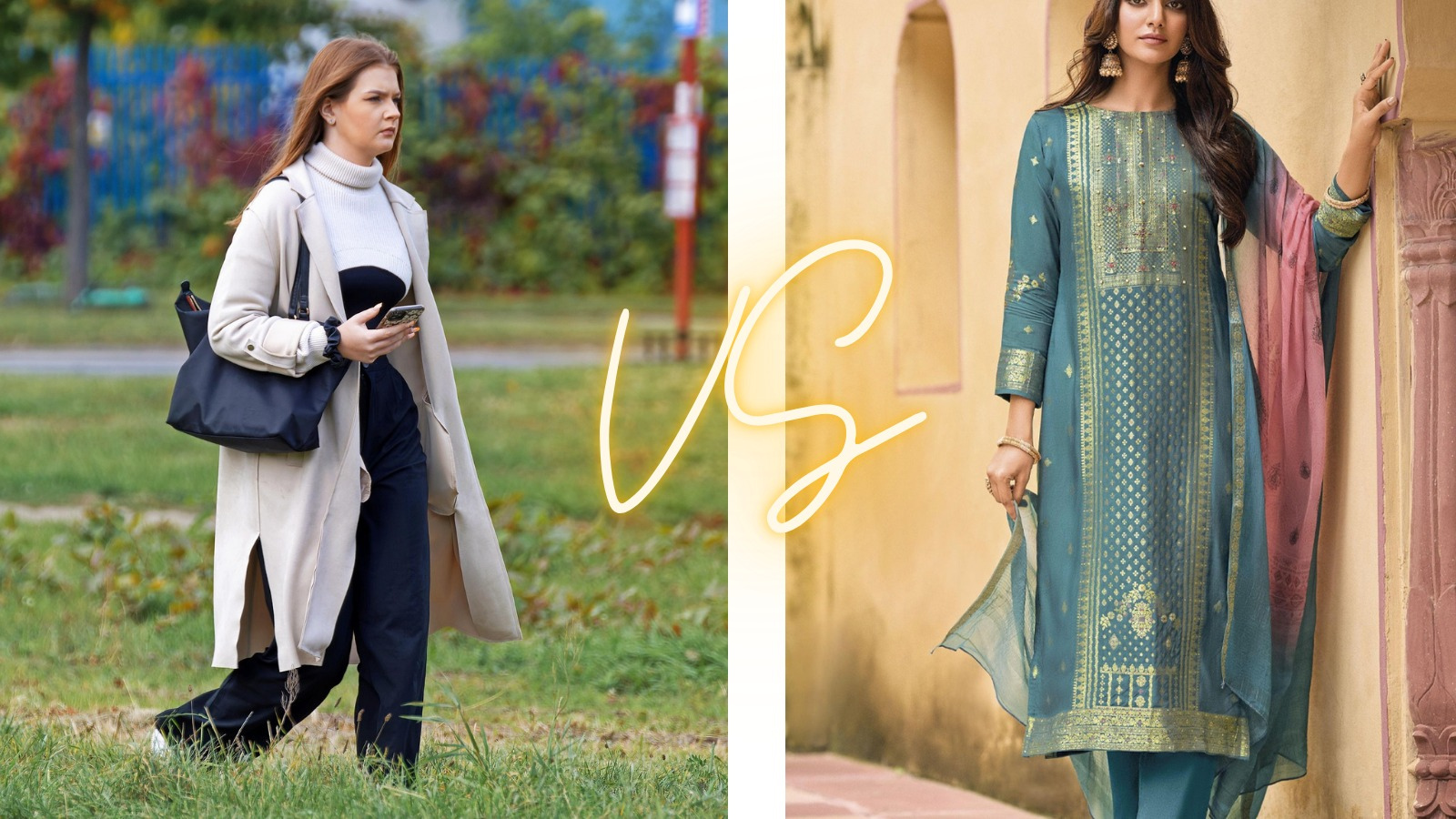
Fashion today beautifully blends tradition and modernity. While ethnic wear reflects culture, heritage, and elegance, western wear represents comfort, versatility, and contemporary style. Knowing how to style both correctly helps you look confident and appropriate for every occasion. This guide will help you understand the difference between ethnic and western wear and share practical styling tips for both.
Understanding Ethnic Wear
Ethnic wear is rooted in traditional and cultural clothing styles. It is often worn during festivals, weddings, family functions, and cultural events.
Common Ethnic Wear Options
- Sarees, salwar suits, lehengas
- Kurtis, kurtas with palazzo or pants
- Sherwanis, dhotis, ethnic jackets
Ethnic wear is known for rich fabrics, intricate designs, and traditional craftsmanship.
Understanding Western Wear
Western wear is modern, global, and often designed for daily comfort and functionality.
Common Western Wear Options
- Dresses, tops, shirts
- Jeans, trousers, skirts
- Blazers, jumpsuits
- Casual and formal western outfits
Western wear is ideal for offices, casual outings, parties, and travel.
Ethnic Wear vs Western Wear: Key Differences
| Factor | Ethnic Wear | Western Wear |
|---|---|---|
| Style | Traditional and cultural | Modern and contemporary |
| Occasions | Festivals, weddings, rituals | Office, parties, daily wear |
| Fabrics | Silk, cotton, linen, brocade | Cotton, denim, blends |
| Fit | Draped or structured | Tailored and fitted |
| Accessories | Traditional jewelry | Minimal or statement pieces |
| Footwear | Juttis, mojris, sandals | Heels, sneakers, boots |
Styling Tips for Ethnic Wear
1. Balance Outfit and Accessories
If your outfit is heavily embroidered, keep accessories minimal. For simple outfits, add statement jewelry.
2. Choose the Right Fabric
Cotton and linen work well for daily ethnic wear, while silk and festive fabrics suit special occasions.
3. Focus on Fit and Draping
Well-fitted ethnic wear and proper draping enhance elegance instantly.
4. Mix Traditional With Modern
Pair kurtis with jeans, palazzos, or belts for a fusion look.
5. Footwear Matters
Choose footwear that matches the outfit and occasion—comfort is as important as style.
Styling Tips for Western Wear
1. Keep It Simple and Clean
Western wear looks best when styled neatly with clean lines and proper fit.
2. Play With Layers
Blazers, jackets, or shrugs add depth and sophistication to western outfits.
3. Choose the Right Footwear
Sneakers for casual looks, heels for formal or party wear, and flats for everyday comfort.
4. Accessorize Smartly
Minimal jewelry works well for offices, while bold accessories can elevate party looks.
5. Focus on Comfort
Choose breathable fabrics and well-fitted clothing for all-day ease.
Fusion Styling: Best of Both Worlds
Modern fashion allows you to blend ethnic and western wear.
Fusion ideas:
- Kurti with jeans
- Saree with a western blouse
- Ethnic jacket over a dress
- Palazzo pants with western tops
Fusion outfits are perfect for semi-formal and festive occasions.
When to Choose What?
- Choose Ethnic Wear for festivals, weddings, cultural events, and traditional gatherings.
- Choose Western Wear for office, travel, casual outings, and modern events.
- Choose Fusion Wear when you want a unique and stylish look that blends both worlds.
Common Styling Mistakes to Avoid
- Over-accessorizing
- Ignoring comfort
- Poor fitting outfits
- Mixing too many styles at once
Keeping your look balanced always creates a better impression.
Conclusion
Both ethnic and western wear have their own charm and purpose. Ethnic wear celebrates tradition and grace, while western wear offers comfort and modern style. The key to great styling lies in choosing the right outfit for the occasion, focusing on fit and comfort, and expressing your personal style confidently.


 No products in the cart.